
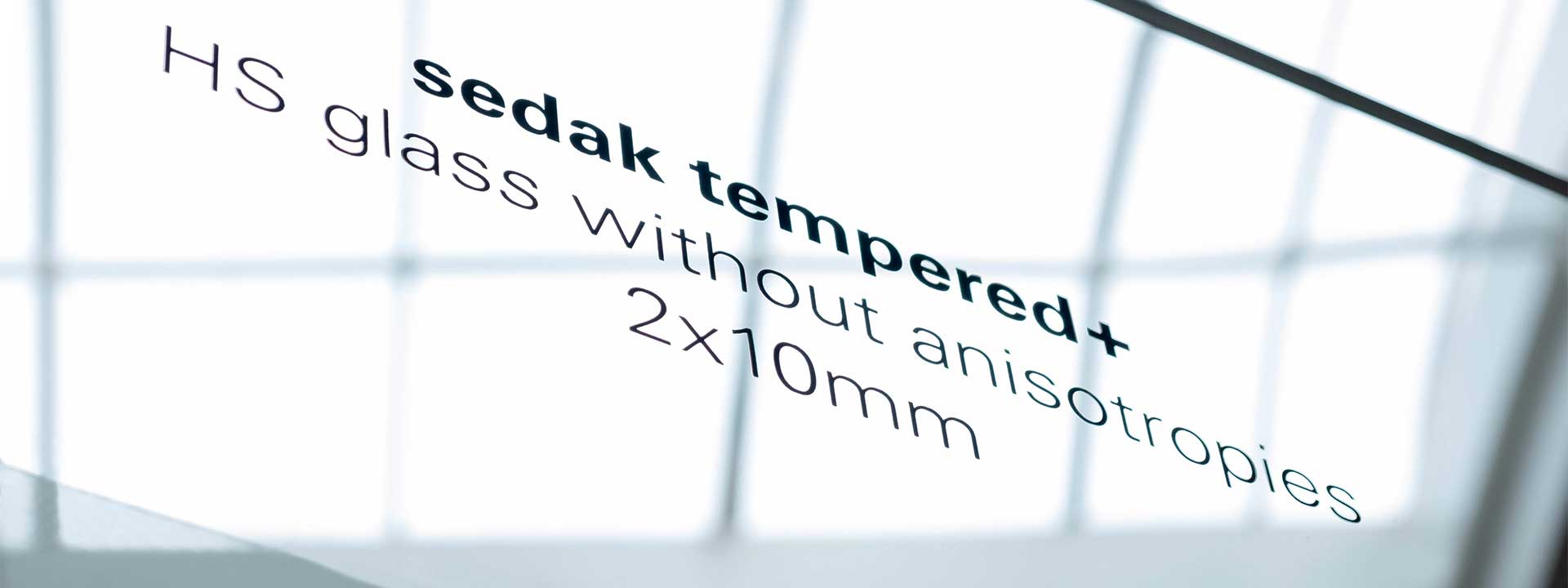
sedak tempered+
Anisotropy-Free Tempered Glass for Flawless Architectural Façades
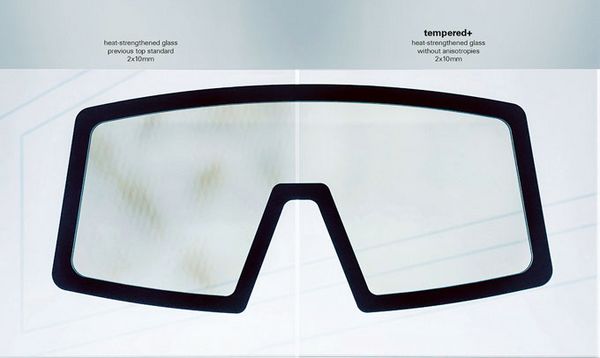
sedak tempered+ is the first patented tempering process that eliminates anisotropies in fully-toughened (FTG/ESG) and heat-strengthened glass (HSG/TVG) — without compromise to structural performance. No rainbow effect. No grey stripes. No iridescent patterns — from any viewing angle and under any lighting condition. Compliant with EN 12150 and EN 1863. The result: architectural glass that performs as beautifully as it looks.
Key Benefits for Architects and Façade Engineers
- Visually flawless glass surface — no patterns, no iridescence, at any angle
- patented, furnace-controlled tempering process — homogenous stress distribution
- No interference color patterns — eliminating the most common aesthetic complaint in tempered glass
- No rainbow or iridescent effect under daylight — critical for all-glass façades and structural glazing
- Full structural performance — equivalent to standard FTG/HSG per EN 12150 / EN 1863
- Compatible with laminated glass (VSG), insulating glass (IGU), and coated glass
For Building Owners & Developers:
Anisotropies in tempered glass are the most frequent cause of aesthetic disputes between clients, architects, and glass suppliers. sedak tempered+ eliminates this risk — providing documented, measurable optical quality that can be specified in tenders and verified on delivery.
What Causes Anisotropies in Tempered Glass — and How sedak tempered+ Solves It
Glass is optically isotropic in its natural state — light passes through uniformly. During thermal toughening, rapid, uneven cooling creates residual stress gradients in the glass, causing incoming light to refract differently across the surface. The eye perceives this as shimmering, rainbow-like spots, or grey stripes — especially noticeable in daylight and against bright skies.
These effects were previously considered unavoidable in any thermally tempered glass. sedak's patented process precisely balances heating and cooling cycles to achieve a homogenous stress distribution, reducing retardation values to the levels specified in the table below — measurably lower than Class A thresholds.
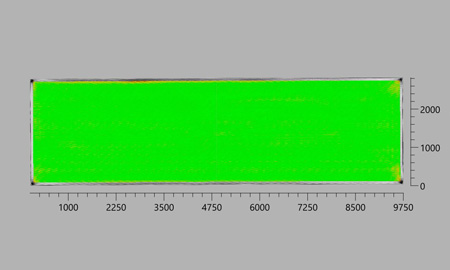
Retardation values are measured using optical polarimetry and documented in the technical specification table on the right side.
The rainbow or shimmering effect in tempered glass is caused by anisotropies — optical irregularities created during the thermal toughening process. When glass is heated to around 620°C and then rapidly cooled with air jets, uneven residual stresses form in the glass. These stress gradients cause light to refract differently across the surface, producing interference color patterns visible as rainbow-like spots, grey stripes, or a shimmering effect — particularly noticeable in daylight or against bright sky backgrounds.
sedak tempered+ uses a patented, furnace-controlled tempering process that precisely balances the heating and cooling cycles. By minimizing stress differences across the glass surface, the process produces a homogenous stress distribution — reducing retardation values to below 40–80 nm depending on thickness (95% quantile), well below EN Class A thresholds. The glass remains fully compliant with EN 12150 (FTG) and EN 1863 (HSG).
Yes. Panes produced with sedak tempered+ can be further processed into VSG (laminated safety glass), insulating glass units (IGU), printed glass, and coated glass without restriction. The anisotropy-free properties are retained through further processing, ensuring the optical quality is maintained in the final installed unit.
Under current European standards (EN 12150, EN 1863), anisotropies in thermally toughened glass are explicitly not considered a defect — they are an accepted consequence of the tempering process. However, they are frequently the subject of aesthetic disputes between building owners, architects, and glass suppliers. sedak tempered+ solves this problem proactively by delivering measurably reduced retardation values, independent of any standard classification.
Anisotropies are most visible — and most problematic — in glass that faces open sky or bright light sources. Critical applications include structural all-glass façades, overhead glazing and glass roofs, large-format curtain walls, glass balustrades exposed to daylight, and luxury interior glazing. In these contexts, sedak tempered+ is specified to ensure consistent optical quality across the entire installation.
sedak tempered+ is thermally toughened glass — not chemically strengthened. It delivers the same structural performance as standard FTG/ESG or HSG/TVG, with the same breakage pattern and safety characteristics. Unlike heat-soaked glass (which addresses spontaneous breakage risk from nickel sulfide inclusions), sedak tempered+ specifically targets optical quality. The two processes can be combined: tempered+ glass can additionally be heat-soaked (HST) where required by project specification.
Yes. sedak tempered+ provides documented retardation values per batch. These values can be referenced in tender and specification documents as a measurable quality requirement, replacing vague formulations like "anisotropy-free" with specific nm thresholds. Contact sedak for a sample specification clause.
| thickness | sedak tempered+ | class A | class B | class C | |||
| ≤6mm | ≤40 ±15nm | ≤70nm | >70 und ≤95nm | >95nm | |||
| 8mm | ≤50 ±15nm | ≤80nm | >80 und ≤120nm | >120nm | |||
| 10mm | ≤60 ±15nm | ≤95nm | >95 und ≤140nm | >140nm | |||
| 12mm | ≤80 ±15nm | ≤115nm | >115 und ≤165nm | >165nm | |||
| 15mm | – | – | – | – |